Showing posts with label Rock. Show all posts

Wednesday, April 03, 2013

Countdown Baby, 84, 83, 82, 81


Black Rebel Motorcycle Club
Baby 81
2007
@ 320
*
During the last album, time couldn't save their souls. Here and now, they can't wait for time to save themselves. Welcome back BRMC.

Welcome back Nick Jago. There's no doubt, the countrified corner that BRMC found themselves painted into during Howl was pretty much down to his errant behavior, so it's not a surprise to find his restoration marking a return to the sound with which they made friends and influenced people.
It's what we want them to do and ultimately, it's what they're best at. Which isn't to say that the time that Robert Been and Peter Hayes spent getting in touch with their acoustic side has been forgotten. Howl showed that Black Rebel Motorcycle Club could be more than just fuzz and the feedback, and Baby 81 takes that idea and runs with it. Ok, it's (very) slightly at the expense of some of the nihilistic snarl which first endeared them to us, but in exchange we get an album with charms that run deeper.
Charms such as the wide open spaces of American X, patrolled by the same Killer Droid Prog Bots that have been most recently coursing through Muse's nightmares. Yeah, it's three minutes too long, but for six, rages with intergalactic anger. Then there's Lein On Your Dreams, which manages to reinvent Word Up by Cameo for the "whatyarebellinagainst waddayagot" generation - keeping the funk, but bringing the alienation.
They even manage to find enough time to get all reflective. Twice, actually, on Not What You Wanted and All You Do Is Talk. It's the second of those which the most successful, despite a beginning worryingly like a U2 ballad. It's almost as if all the shit BRMC have suffered over the past few years has caused them to, wait for it, lighten up. A bit.
Not that they've forgotten the joy of the grind. Opener Took Out A Loan railroads along on a riff which grates like Trent Reznor's teeth after someone replaced his Candela with industrial strength speed; Berlin has a back'n'forth glam-rock melody which sounds like someone dragging Noddy Holder across broken glass; the wiry, claustrophobic Need Some Air is like they've captured a feral Interpol song and are slowly choking the life out of it with an oily rag.
All grimy, ragged, top drawer stuff. But it's Weapon Of Choice which is the best song here, the best example of the joining up of old BRMC to new BRMC: pissed-off and indignant, but more eloquent with it; steeped in layers of swirling guitars, but applying them with more sophistication.
Given it's gestation, it's fairly amazing that Baby 81 wasn't stillborn. To find it's kicking with such vigor is little short of remarkable. Oh, welcome back BRMC.- Tim Lee
*
Tracklist
1. Took Out A Loan
2. Berlin
3. Weapon Of Choice
4. Window
5. Cold Wind
6. It's Not What You Wanted
7. 666 Conducer
8. All You Do Is Talk
9. Lein On Your Dreams
10. Need Some Air
11. Killing The Light
12. American X
13. Am I Only
*
Get it HERE

Give Your Ass A Kick Start


Black Rebel Motorcycle Club
B.R.M.C
2000

I've noticed quite a bit of action on this offering lately so thought I would re-up closer to the top for those not inclined to dig to much. As many hits as this file has had over the last 5 years, not one comment,  good or bad.


Biography
by Bryan Thomas
The seed that became Black Rebel Motorcycle Club — or B.R.M.C. for short — was planted back in 1995, when Robert Turner and Peter Hayes met while attending high school in their hometown of San Francisco. They formed a solid friendship and camaraderie based on a mutual love of early-'90s U.K. bands like Ride and the Stone Roses and a few on the successful Creation Records label (the Jesus and Mary Chain, My Bloody Valentine). They ultimately decided to put their as-yet-unnamed project on hold, and joined other bands while still attempting to keep in touch with each other; frequently they would attend each other's gigs. In 1998, after both had fled their previous groups, they rejoined, this time adding new drummer Nick Jago. (Jago, originally from England, had finished art school to move to the States in 1996). They began performing live in November 1998. Originally calling themselves the Elements — they quickly changed it after discovering many other bands had shared the same title — they purloined their new name from the Marlon Brando-led biker gang who stormed into that dusty California hamlet in The Wild One.By 1999, B.R.M.C. had recorded a polished 16-track demo CD that began making the rounds (they sold all 500 copies at their shows), and relocated to Los Angeles. Local Santa Monica-based KCRW (a well-known FM station that compiled and released yearly Rare on Air CD compilations) jumped on the band's demo first, giving them their initial airplay, but soon interest in the band spread across the Atlantic, where BBC Sheffield even named the demo their "Record of the Week." Oasis' Noel Gallagher heard it and wanted to sign the band to his new Brother Records imprint, telling MOJO magazine that they were his favorite new band, but after inking a lucrative Warner/Chappell publishing deal, they were fielding offers from interested major and indie labels, ultimately choosing to sign in March 2000 with Virgin Records. After a short U.S. tour with the Dandy Warhols, the band entered the studio and produced a self-titled debut, B.R.M.C., which was issued in March 2001. Two years later, the trio returned with a slicker edge; Take Them on, on Your Own appeared in September 2003. They severed ties with Virgin Records eight months later. A deal with RCA surfaced within months, and the acoustic, Americana-influenced Howl arrived in August of 2005. The band moved back to the loud rock & roll approach favored on their first two albums with 2007's Baby 81.
Review
by Bryan Thomas
This L.A.-based band (originally hailing from San Francisco) came along just when they were needed most. This self-produced major-label debut boldly plunders a reverb-and-white noise course previously trampled underfoot by long-gone British bands of the late '80s and early '90s (the Jesus & Mary Chain, the Verve, Ride, the Stone Roses, etc.). It all sounds very British, on many levels, despite the fact that only one band member is an Englishman living in exile in the States. On some songs, however, the driving, over-amped guitars (often buzzing with "VU needles-in-red"-type feedback) and pounding drums have a swaggering primeval feel that rivals solid Detroit rock outfits, both old and new (including the Stooges and the Go, to name two). A few have dark, introspective lyrics, with subjects like impending death ("Rifles" at their heart, while others have a positive, more uplifting feel (cf. "Salvation"), but it's really the group's cohesive, solid production overall that captures a shoegazing, blustery rock vibe not heard for nearly a decade or more. Highlights abound on this astonishing disc, including the bitter opening salvo, "Love Burns," the diaphanous space pop of "Too Real," and the flurry of sawtooth guitar scree that is "Whatever Happened to My Rock n' Roll (Punk Song)," a track recalling the manic intensity of the Stooges circa Fun House.


Get it HERE


Tuesday, April 02, 2013

Dig it!

Stumbled over and landed hard on this one. As they say:

About OfficialHeavenandEarth


Dig it!

Tuesday, March 19, 2013

Be Careful With These Loaded Pistolrays


About Pistolrays Zagrebačka četvorka Pistolrays proizvode zaprljani garažni zvuk isprepleten melodijama inspiriranim prvim i drugim valom surf rock glazbe iz 60-tih godina, a začinjavaju ga grmljavinom reverb unit. Od osnutka svirali su po svim važnijim zagrebačkim klubovima sa bendovima poput Threesome, Dykemann Family i Latex Willer, a njihov nedavno snimljen debitantski EP Moon Riot proglašen je albumom tjedna na stranici potlista.com

Pistolrays Zagreb Four Pistolrays produce dirty garage sound interwoven melodies inspired by the first and second wave of surf rock music from the 60-ies, and seasoned ga afternoon reverb unit. Since inception played at all the major clubs in Zagreb with bands like Threesome, Dykemann Family and Latex Willer, and recently recorded their debut EP Age Riot declared the album the week on page potlista.com

I like it all. Each of the tracks hit some of my favorite sounds and grooves. Made my reverb happy bone go all tingly. Words hardly fit for these guys. Definitely worth the time to grab this disc.

Get em HERE

Guitar - Vibor Vlainić
Guitar - Ivan Bjelajac
Bass - Domagoj Kos
Drums - Nikola Baras

Wednesday, March 06, 2013

This Man Wil NOT Rest in Peace

Ten Years After
Essential Ten Years After
1991


After hearing this morning of the passing of Alvin Lee, lead singer and guitarist of Ten Years After I had to pull this one out. For those not familiar (shame on you) this is a very fine example of the kind of driving rock n roll this group put together. I saw them perform locally about 10-12 years ago and it was a mind and ear blowing experience. Sitting right in front of a HUGE stack of speakers I was one happy camper as my ears rang for days.

Like I said, this man will not rest in peace, he will be rockin' the nations of the world with his hard driving sound.

We will miss him greatly.

Tracklist


1 Rock And Roll Music To The World                         
2 I'd Love To Change The World                         
3 I'm Going Home (Live)                         
4 Choo Choo Mama                         
5 Tomorrow I'll Be Out Of Town                         
6 I Woke Up This Morning                         
7 Me And My Baby                         
8 Good Morning Little Schoolgirl (Live)                                              
9 Goin' Back To Birmingham                         
10 50,000 Miles Beneath My Brain                         
11 Sweet Little Sixteen                         
12 I'm Coming On                         
13 Love Like A Man                                                                            
Baby, Won't You Let Me Rock 'N' Roll You                                                           
 
Get it HERE 


Tuesday, February 19, 2013

If Your Hungry Take A Bite of This Sandwich


Black Cat Bones
Barbed Wire Sandwich
1969


Barbed Wire Sandwich is a heavy blues rock album released by Black Cat Bones in November 1969. The original vinyl version of the album is now highly sought after by collectors of rock and heavy blues music of the late 1960s and 1970s. The right place at the wrong time. That could be the epitaph on the gravestone of Black Cat Bones. Having acted as unofficial house band for a number of visiting US artists during the British Blues Boom of the mid to late Sixties and survived a potentially fatal line-up change into the bargain, they finally made it to vinyl rather late in the day. This, their first and only album, reached the racks in the last months of the Sixties, just as progressive rock was in the ascendancy.
Such imperfect timing may have adversely affected their chances of commercial success and consequently their number of column inches in the history of popular music, but in no way diminishes the excellence of their music.
That Black Cat Bones remains a known name is due to two musicians whose names remain stubbornly absent from the credits. Celebrated guitarist Paul Kossoff would go on to superstar status as a founder member of FREE, but started his musical career in earnest in these ranks. And though neither he nor drummer Simon Kirke appear on the album, Koss's featured replacement Rod Price, a player of no mean ability who would later take his axe-wielding skills to Stateside fame and fortune with Foghat.
Buy lets backtrack now to the events that led up to November 1969, when Barbed Wire Sandwich was released on Decca's progressive Nova lael. Though retaining semi-professional status for some time, Black Cat Bones had enough going for them to catch the eye of legendary Blues producer Mike Vernon. His patronage brought them their first recording session, backing Champion Jack Dupree for a Bue Horizon album, "When You Feel The Feeling You Was Feeling" meanwhile, they made a reputation in their own right touring Germany and Scandinavia. Kossoff and Kirke jumped ship, in 1968 after seeing singer Paul Rodgers fronting the similarly unrecorded Brown Sugar; hence by the time Black Cat Bones entered Tangerine and Decca Studios the following year with recording stardom in mind the existing nucleus of brothers Derek and Stu Brooks on rhythm guitar and bass respectively and vocalist Brian Short had been augmented by Phil Lenoir (drums) and Rod Price (lead guitar).
The album kicks off with Chauffer - a dead ringer in both pace and chord sequence for FREEs Walk in my Shadow from their debut, released moths before. And the well-worn blues metaphor of riding (Free rode ponies, Black Cat Bones a car such is progress)indicates the overtly sexual inclinations both shared. Elsewhere, there's a welcome touch of acousticity (on Four Women) to leaven the mixture - owners of well worn originals will thank heavens for non clicky CD here! but overall, the album very much reflects the electric blues of the stage set, as you'd expect for a band that played live so often.
It was producer David Hitchcock, who later guided the careers of Caravan, Camel, Genesis (circa Foxtrot) and more, to supply the studio expertise they needed to give Barbed Wire Sandwich respect, the band fading in and out around the barrelhouse piano of Robin Sylvester. This would have been impossible live, since the BKB's line up didn't feature keyboards (Sylvester was the sound engineer a Tangerine), so was clearly an attempt to diversify and use the studio to greatest advantage. Steve Milliner lends further ivory-tickling skills to Feelin Good and dont forget, FREE eventually added the keyboard talents of Rabbit Bundrick to give them a route to progress.
Talking of progression, the middle section of Save My Love For You, along with the other dramatic mood and/or tempo changes throughout the album suggest that the growth of progressive rock had not passed them by. Rod Price was quite different in approach to Kossoff, his fast, fluid style contrasting with the howling sustain of his predecessor - but he was clearly no slouch either, as he proved on the final track. The self-penned Good Lookin Woman is the one song on which Price tackled lead vocal. More importantly, its a guitar tour de force, fading out prematurely and leaving the listener wondering exactly what would have happened next.
Leaving the audience wanting more was just one of the lessons learned on the boards, so its hardly surprising that those who saw BKB live retain approving memories. One such spectator was Stuart Booth, now a publisher, who caught a show at Londons Marquee Club as the album was readied for release. 'They were a good live band who missed the boat' he recalls. 'The album came out long after other British blues bands' and sunk without trace, so no-one was interested. I was pleasantly pleased to see people still playing that sort of thing. I though it would all come around again - and, of course, it did.
Many years after witnessing Black Cat Bones at the Marquee, Booth had the pleasure of publishing Blues - Thbe British Connection, a definitive rundown of the scene by one Bob Brunning (to be reissued by Blandford as Blues In Britain: The History 1960s-1990s in February 1995). Brunning, as blues scholars may recall, was the original bass player with Fleetwood Mac, the man who deputised for John McVie until he could secure his release from John Mayall's Bluesbreakers.
He enters the Black Cat Bones story, albeit tangentially, at this point - because when the album flopped and the band threatened to fall apart, it was a couple renegades from the Brunning Sunflower Blues Band, Pete French and Mick Halls, who were drafted in to make up the numbers after Price, Short and Lenoir left the ranks. (Short, incidentally, cut a hard to find solo album, Anything For a Laugh, for Transatlantic in 1971). With a new drummer, Black Cat Bones metamorphosed in Leaf Hound, Zeppelin-esque heavy rockers who, like their predecessors, produced one excellent album before disbanding. This was Growers Of Mushroom - and in 1994 it joined Barbed Wire Sandwich in the See For Miles catalogue.
So there endeth the story of Black Cat Bones, a band whose mere footnote in the annals of British rock seems a mite ungenerous, given their musical legacy. Even Bob Brunning only rated them a couple of sentences - but as Barbed Wire Sandwich will hopefully prove, music often speaks louder than words.. Mick St. Michael

Track listing

  1. "Chauffeur" – 5:15 (Andy Stroud)
  2. "Death Valley Blues" – 3:52 (Arthur "Big Boy" Crudup)
  3. "Feelin' Good" – 4:58 (Anthony Newley, Leslie Bricusse)
  4. "Please Tell Me Baby" – 3:10 (Harrison D. Nelson Jr)
  5. "Coming Back" – 2:32 (Rod Price)
  6. "Save My Love" – 4:50 (Black Cat Bones)
  7. "Four Women" – 5:09 (Nina Simone)
  8. "Sylvester's Blues" – 3:45 (Price)
  9. "Good Lookin' Woman" – 7:16 (Price)

Take a bite HERE

Look What Washed Up From The North Shore


Mark Brodie & The Beaver Patrol
The Shores of Hell
1994
@320


Here is one from the first year of Trustar Vibrations. Always a great one.

Opening with the sectionalist anthem "Frogs Can't Surf," Canada's Mark Brodie & the Beaver Patrol go on to double-pick their way through a varied, authentic, and fun instrumental surf album.
Captured with a bare minimum of studio effects, Mark Brodie et al come across with the spontaneous energy of a live show, but with a clarity of sound not often heard live or on old surf records. The packaging is very 60s, and borrows from the "Living Stereo" logos used on classical and experimental electronic recordings at that time, offering an interesting speculation about what those Chantays records could have sounded like if they, too, had been utilizing the breakthrough stereophonic technology of the early 60s. The Beaver Patrol make no attempt to update the surf sound, and attack the genre with reverence rather than modernist irony used by other contemporary surfers like Man or Astroman. Still, even with the trademark reverb, double-picking, and guitaar runs used as break beats, the the album is remarkably good: a wide variety of tempos differentiates the 16 songs, the occasional toy organ brings other 60s garage styles to mind (the Pacific Northwest's Kingsmen and Wailers, in particular), and all the musicians display great talent for surf music. The percussion on tracks like "Theme From the Old West" is especially deft and original. For fans of Dick Dale et al, The Shores of Hell sits very comfortably next to the original masters of the genre. It is a rare piece of nostalgia that manages to transcend its derivative origins and add flesh to old bones. Tim Mohr

Tracklist

1. Frogs Can't Surf
2. Jezebel
3. Scratch
4. Bitch Stole My Board
5. Death At Mile Zero
6. Wedgie
7. Day The Surf Stood Still
8. Spin Cycle
9. Banzai Rider
10. Scarlett O'hara
11. Theme From The Old West
12. Bad Hair Day
13. Suicide Ride
14. Meltdown
15. Phantom Wave
16. The Shores Of Hell


Get it HERE

Sunday, February 17, 2013

You've Been Warned

The Vara-Tones
Jetty Subject To High Surf
2000


Bill Epps and Rich Campbell formed The Vara-Tones in 1961. They are one of the original surf groups that were around when the first wave started. They were most active between '63-'65, during the height of the surf-instro craze. Over thirty years later they have returned as revitalized granddads of a genre that has been experiencing tremendous growth and renewed interest from all outlets of the media, including an entirely new and very hip fan base. Yes, another group has risen out of the ashes to reclaim their territory. This is a wonderful time to be making music. The world has never been more open to new and different sounds. Although this sound is not new and familiar to some, it never really got the recognition and opportunity that its now experiencing. There is no one that deserves the accolades and fame more than the guys that were there in the beginning. Listen up all you youngsters out there, want to play surf-instro the way it was meant to be played? The Vara-Tones hold a clinic for eager ears that are willing to learn. They have successfully re-ignited their original sound with the help of today's technologies and equipment. The base sound is still there, it just has a little more oomph now (as Phil Dirt says). The original hit "Repeto" (1964), has been given a shot of new life with an upbeat rockin' flavor and a new title, "Repeto 2000." You get the best of both worlds, as the group plays the original as well the updated version. Speaking of the best of both worlds...When many original surf groups reform and make their music combined with today's sound, it comes out sounding so much stronger, with a new fullness and freshness to it. What was once a mere ripple from a recording standpoint, is now a Tsunami headed your way to give you the ride of your life. It all sounds that much better now because of the enhanced and improved sound quality and sonics. The latin, island flavored tunes are immensely effective. "El Sereno" and "Midnight In Mazatlan", are as picturesque and inviting as the beaches that are envisioned inside your head while listening. Welcome back Vara-Tones. The surf-instro community needs more groups like you to reform and to remind people from whence they came. Fair warning- if you have a surfboard in hand, and if this music is played loud, the jetty is subject to high surf. Keith Hannaleck


Tracklist

1. Surf Blaster
2. Over the Edge
3. El Sereno
4. Invasion of the V-People
5. Midnight in Mazatlan
6. The Jetty
7. Rendezvous Run
8. Vara-Tone Stomp
9. Varafied
10. Repeto 2000
11. Sunset At the Wedge
12. Groo-V-Chicken
13. Drumbox
14. Repeto ('64)

Get it HERE
 

Saturday, February 16, 2013

When In Rome

Sublime With Rome
Yours Truly
2011


Review by Jason Lymangrover
After losing Bradley Nowell -- the face of Sublime -- the rest of the group retired the Sublime name for a good 13 years before recruiting Rome Ramirez. For Yours Truly, their first release together under the name Sublime with Rome, it’s wise that they play up the fact that this is a different band than the one that put out 40 oz. to Freedom. Ramirez doesn’t have nearly as much personality as Nowell, and for many, the former frontman was the essential ingredient. However, for the fans that are willing and able to move on, Ramirez’s silky voice nicely complements bassist Eric Wilson and drummer Bud Gaugh. With the exceptions of the electronic dub of “Safe and Sound“ and a cameo by rapper Wiz Khalifa in the bridge of “Can You Feel It,” they stay true to the sound that made Sublime a household name. Ramirez does a good job of mimicking Nowell's style of guitar playing, and on vocals he wisely holds to a less-is-more approach rather than trying to be showy. He offers up a laid-back, beach bum style of singing reggae-pop and So-Cal punk, appealing equally to fans of Jack Johnson and Third Eye Blind. Meanwhile the production, courtesy of Butthole Surfers' Paul Leary, seems straight from the days when the Third Wave of Ska Revival was peaking (with the occasional DJ scratch thrown in for good measure). Yours Truly doesn’t quite match the caliber of the albums in the Sublime discography, but it’s a fairly enjoyable spin-off just the same.
 
Tracklist
 

Get it HERE

Friday, February 15, 2013

Drawing A Line In The Sand

Jetpack
Planet Reverb
2000


Jetpack is the surf instrumental brainchild of guitarist Daniel J. This disc is steeped in the twangy sound of fender guitars and vibrato effects but not limited to it. Mandolin, fretless bass, theremin, and an unmistakable Police influence all coexist here. Produced for Pascal Records by David Pascal who also produced the similar-sounding Blue Hawaiians. Twelve originals are included with interesting cover versions of the Hollies "Bus Stop" and Simon and Garfunkel's "Sounds of Silence."

Tracklist
1 Motel Nowhere
2 The Fury
3 Bus Stop
4 Pacifica
5 Get Even!
6 Agent J
7 Lunik 2
8 The Texas Longboard
9 Pedro
10 Intro
11 Mystery Prom
12 Fail Safe
13 The Sound of Silence
14 The Return of Pedro

Get it HERE

Thursday, February 14, 2013

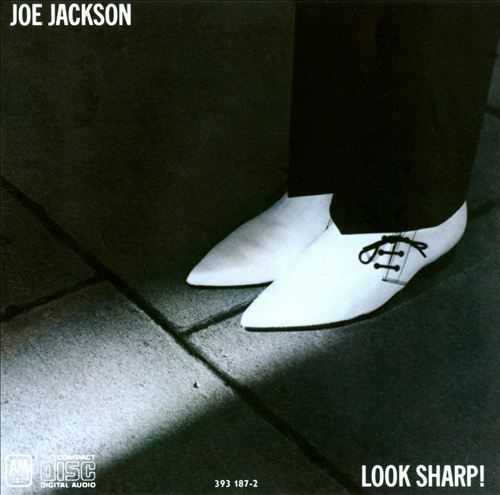
Lookin' Sharp

Joe Jackson Look Sharp 1979 - One of my favorite late 70's sounds. Joe was quite the shaker. So get up, get ready, and most importantly, LOOK SHARP! - A brilliant, accomplished debut, Look Sharp! established Joe Jackson as part of that camp of angry, intelligent young new wavers (i.e., Elvis Costello, Graham Parker) who approached pop music with the sardonic attitude and tense, aggressive energy of punk. Not as indebted to pub rock as Parker and Costello, and much more lyrically straightforward than the latter, Jackson delivers a set of bristling, insanely catchy pop songs that seethe with energy and frustration. Several deal with the lack of thoughtful reflection in everyday life ("Sunday Papers," "Got the Time"), but many more concern the injuries and follies of romance. In the caustic yet charming witticisms of songs like the hit "Is She Really Going Out With Him?," "Happy Loving Couples," "Fools in Love," and "Pretty Girls," Jackson presents himself on the one hand as a man of integrity seeking genuine depth in love (and elsewhere), but leavens his stance with a wry, self-effacing humor, revealing his own vulnerability to loneliness and to purely physical attraction. Look Sharp! is the sound of a young man searching for substance in a superficial world -- and it also happens to rock like hell. Get it HERE

Thursday, April 26, 2012

Me Thinks The Poison Done Already Killed Billy Boy


Billy Boy On Poison

Drama Junkie Queen

2009


No word of any recent activity on Billy Boy On Poison. If you didn't watch closely you might have missed them altogether. They were a quick flash but I liked the tune I posted up a couple of years ago. Check it out HERE

New York scuzz-rock by way of the Sunset Strip, Billy Boy on Poison feel as if they were concocted in a laboratory, assembled from elements of every rock trend since 1994. Take a bit of the Strokes' tight, efficient new wave art-punk and downtown hipster sensibility; add a bit of hooks borrowed from Oasis, a little disco-rock from Franz Ferdinand, enough ironic hair metal thievery to get them on the radio à la Hinder, and a bit of Jet's three-chord bounce; and season with Jack White guitar solos and stairstep classic rock riffs reworked from Hendrix and the Beatles -- and you'll have Drama Junkie Queen, an exercise in trash-rock. Stephen Thomas Erlewine, Rovi


Tracklist


1 On My Way
2 Saturday's Child
3 Happy Valentine's Day
4 4 Leaf Clover
5 Angry Young Man
6 Drive Me Insane
7 Higher Power
8 You're Too High
9 Standing Still
10

Another Lonely Start


Get it HERE

Wednesday, April 25, 2012

Who Stole The Damn Freeway??!


The Doobie Brothers

The Captain and Me

1973

Ripped @ 320


Another favorite of mine that I never get tired of.

The Doobie Brothers' third long-player was the charm, their most substantial and consistent album to date, and one that rode the charts for a year. It was also a study in contrasts, Tom Johnston's harder-edged, bolder rocking numbers balanced by Patrick Simmons' more laid-back country-rock ballad style. The leadoff track, Johnston's "Natural Thing," melded the two, opening with interlocking guitars and showcasing the band's exquisite soaring harmonies around a beautiful melody, all wrapped up in a midtempo beat -- the result was somewhere midway between Allman Brothers-style virtuosity and Eagles/Crosby & Nash-type lyricism, which defined this period in the Doobies' history and gave them a well-deserved lock on the top of the charts. Next up was the punchy, catchy "Long Train Runnin'," a piece they'd been playing for years as an instrumental -- a reluctant Johnston was persuaded by producer Ted Templeman to write lyrics to it and record the song, and the resulting track became the group's next hit. The slashing, fast-tempo "China Grove" and "Without You" represented the harder side of the Doobies' sound, and were juxtaposed with Simmons' romantic country-rock ballads "Clear as the Driven Snow," and "South City Midnight Lady." Simmons also showed off his louder side with "Evil Woman," while Johnston showed his more reflective side with "Dark Eyed Cajun Woman," "Ukiah" and "The Captain and Me" -- the latter, a soaring rocker clocking in at nearly five minutes, features radiant guitars and harmonies, soaring ever higher and faster to a triumphant finish.

Tracklist

  1. Natural Thing
  2. Long Train Runnin’
  3. China Grove
  4. Dark Eyed Cajun Woman
  5. Clear As The Driven Snow
  6. Without You
  7. South City Midnight Lady
  8. Evil Woman
  9. Busted Down Around O’Connelly Corners
  10. Ukiah
  11. The Captain And Me

Get it HERE


Sunday, March 18, 2012

I Heard It, I Heard It, I Heard It On The X


Los Super Seven

Heard It On The X

2005

Ripped @ 320 w/3% recovery


ZZ Top’s 1975 hit “Heard It On the X” is a tribute to the radio stations known as “border blasters.” Switched on starting in the 1930s, the border blasters were stations transmitting from the southern side of the U.S.-Mexico border, blasting their AM signals into much of the southern half of the U.S.—and beyond (some could be heard as far away as Australia and Finland, according to Gene Fowler and Bill Crawford, authors of the book Border Radio). Being Mexican meant these 100,000+ watt behemoths (some with as many as 1 million watts) didn’t have to abide by FCC rules and regulations, and being on the border meant that they were often truly bilingual, mixing up a cocktail of conjunto, rock, country, tejano, jazz, mariachi, and R&B. Stations such as XER, XEG, and XELO ruled the border landscape until radio consolidation brought them down in the early 1980s. [The “X” in the song’s title stands for the fact that all of these border blasters, like all Mexican radio stations, had call letters that began with “X.”]

“Heard It On the X” is now also the title track of the new album by the Tex-Mex collective Los Super 7, who’ve crafted an album-length tribute to those border blasters many of the group’s rotating cast of members grew up on. Albums this self-consciously diverse often fail to work precisely because of their diversity, but Heard It On the X works thanks to it. Mariachi horns (“Ojitos Traidores,” one of a pair of Spanish-language entries here) rub up against a western swing tune with Lyle Lovett on vocal duties (the Bob Wills song “My Window Faces the South”) and the aforementioned ZZ Top cover, while in the corner, a swaying R&B ballad (“Talk to Me,” very class of ’66) makes nice with a garage-rock rave-up (the Doug Sahm tune “I’m Not That Kat (Anymore),” sung here by John Hiatt). The Bobby Fuller cut “Let Her Dance” sounds positively Marshall Crenshaw-esque, taken on by Joe Ely. And it all works, reveling in its diversity and simultaneously making it kind of irrelevant.

This is true Americana, American roots music, a 12-song honest-to-God musical melting pot, genres be damned (and ignored); none of these songs sounds jarring next to its neighbors. Producers Dan Goodman (the man behind Los Super 7) and Rick Clark (whose free CDs he compiles for Oxford American are much-loved by myriad music lovers) called in Texan guitar great Charlie Sexton to assist in putting together an album they hoped would be classic. He put together his own band (including Tin Machine’s Hunt Sales pounding the skins) for about half of the album’s tracks, recruiting the wonderful Calexico to backup most of the rest. Texas music legend Lloyd Maines—yes, father of Dixie Chick Natalie Maines—adds pedal steel to a track, and Flaco Jimenez plays accordion on another, while artists from Rodney Crowell and the Mavericks’ Raul Malo to Delbert McClinton and Clarence “Gatemouth” Brown take turns on vocal duties.

Malo’s “The Song of Everything” (another Sahm cut) is a particular highlight, a smoky, jazzy gem (thanks in large part to the West Side Horns’ playing) smack-dab where you don’t expect to find it (let alone betwixt Crowell’s Buddy Holly cover “Learning the Game” and Rick Trevino’s aforementioned “Ojitos Traidores”). But there’s not a weak link to be found here: the song selection is fairly flawless, as is the playing, as is the pairing of singers with songs. Sexton and company could have smoothed out this album’s rough edges, but they celebrate the cross-pollination from one genre to the next, in the process creating what should, in fact, go down as a classic American album. Heard It On the X is the best album 2005’s offered thus far.


Tracklist

1 The Burro Song
2 Cupido
3 Talk To Me
4 I'm Not That Kat Anymore
5 My Window Faces South
6 Let Her Dance
7 Learning The Game
8 The Song Of Everything
9 Ojitos Tridores
10 I Live The Life I Love
11 Heard It On The X
12 See That My Grave Is Kept Clean

Get it HERE

Nowhere Near Surf But Still A Damn Rockin' Sound


Little Barrie

King of The Waves

2010

Ripped @ 320 w/ 3% Recovery

Served by Terry C


Terry turned me on to these guys a little while back and from the very first track they grabbed me by the stones. It's definitely not surf but it is damn good rock that gets down to the bone. Enjoy.


Little Barrie is a power trio that originated in Nottingham, Nottinghamshire, England, since relocated to London. Their sound could be described as stripped down R&B/Soul/Funk/Blues/Garage rock jamband. The band consists of Barrie Cadogan (guitar and vocals), Lewis Wharton (bass) and Virgil Howe (drums). Before Howe, Billy Skinner was playing drums. Before Skinner, Wayne Fulwood was playing drums and singing. The first Little Barrie single "Shrug Off Love" b/w "Reply Me (It Don't Deny Me)" was recorded by Barrie before the project became a full band with session drummer Chris Lee. Keys player Miles Newbold appeared on the B side Reply Me and also engineered the session.

Little Barrie released their debut album, We Are Little Barrie, in February 2005. It was recorded over a series of 23 Wednesdays in Edwyn Collins' studio.

Wayne left the band before the recording of their second album. According to Lewis "Yeah, it was a surprise... I didn't think it would ever happen. The constant touring was driving Wayne insane. He was away from home a lot... It got to the point where we were about to go the US to record the new album and it dawned on him that he'd be away again, and that we would be touring it the year after that. So he said he couldn't do it anymore."

Stand your Ground was recorded between New York with Dan The Automator on the producing skills and the help of Russell Simins (of Blues Explosion) on drums and London with Mike "Prince Fatty" Pelanconi as producer and new drummer Billy Skinner.Whilst in New York with Simins they landed a support slot with legendary blues guitarist Hubert Sumlin. The band toured the album in Europe, Japan and Australia throughout 2007. They also backed Paul Weller on the title track of his 2008 album 22 Dreams

In 2008 Virgil Howe, son of former Yes guitarist Steve Howe,[1] joined the band on drums and the trio backed Mareva Galanter on her album entitled Happy Fiu in March 2008.

Between 2009 and October 2010 the band wrote and recorded their third album "King Of The Waves" working again in Edwyn Collins studio with Edwyn, Seb Lewsley at the controls and Shawn Lee mixing. Chris Potter mastered the album. The first single of "King Of The Waves" was "Surf Hell". This track has recently featured as the theme tune to the 2011 Channel 4 series - Sirens and is also playable on the multi-platform video game, Rocksmith. The album was released in the UK on June 27th, 2011[2] and will be released in the US on February 28th, 2012.[3]

After touring with Charles Bradley in Spain, Little Barrie was invited onto his North American Tour in early 2012.[


Tracklist

1. Surf Hell
2. How Come
3. Does The Halo Rust
4. Precious Pressure
5. King Of The Waves
6. Now We're Nowhere
7. Dream To Live
8. Tip It Over
9. I Can't Wait
10. New Diamond Love
11. Money In Paper

Get it HERE


Friday, March 16, 2012

A Little (More)Face Time


The Faces
Five Guys Walk Into A Bar
2004
Re-Up
Ripped at a glorious 320 for your ears delight
*
Review by Stephen Thomas Erlewine

There has never been a better box set than the Faces' Five Guys Walk into a Bar.... There has never been a box that captures an artist so perfectly, nor has a box set taken greater advantage of unreleased and rare material, to the point where it seems as essential and vital as the released recordings. Simply put, there's never been a box set as necessary as this, since it tells the band's entire tale and explains exactly what the fuss is all about. Unfortunately, some explanations are in order, since the Faces never made it big, resigned to cult status in America and Britain alike. Nevertheless, if you love rock & roll with an all-consuming passion, you may consider the Faces the greatest rock & roll band ever. And you'd be right. Other bands were certainly bigger and plenty wielded a stronger influence, but the Faces were something unique, an endearingly ragged quintet that played raw, big-hearted rock & roll as hard as the Rolling Stones, but with a warm, friendly vibe that would have sounded utterly foreign coming from the Stones. At the turn of the '60s, that warmth was unusual in rock & roll, since most of the big bands were larger than life; even the Kinks, the quaintest and quietest of the titans of the late '60s, had a theatrical bent that lent them a mystique.

In contrast, the Faces were utterly without mystique. They were unpretentious to a fault, coming across like the lovable lads from the neighborhood who were always out for a good time, whether it was before, during, or after a gig. They were unassuming and mischievous, with their raggedness camouflaging a sweetness that flowed throughout their music; they were charming rogues, so endearing that even the infamously cranky, trendsetting British DJ John Peel had a soft spot a mile wide for them. That raggedness resulted in exhilarating music, but also made the Faces inconsistent on-stage and in the studio. At their peak, nobody could touch them, but even their greatest albums were sloppy, never maintaining their momentum. They would also throw away great songs on non-LP singles, and their live performances -- including BBC sessions for Peel -- often had a raucous energy not quite captured on their albums. All of these elements taken as a whole add up to a great band, but no single album, not even the first-rate 1999 compilation Good Boys When They're Asleep, captured each of these elements.

Five Guys Walk into a Bar... does. Produced and sequenced by their keyboardist, Ian McLagan, the set throws all conventional rules of box sets out the window. It's not assembled in a chronological order. A grand 43 of its 67 tracks are non-LP cuts and rarities, including a whopping 31 previously unreleased tracks. It has all the B-sides never released on CD. Several songs are repeated in alternate live or studio versions. Such a preponderance of rarities would usually mean that a box set is only for the devoted, but that's not the case here -- these rarities are the very reason why Five Guys Walk into a Bar... succeeds in a way none of their original albums do, since they fill in the gaps left behind on their four studio albums. This does mean that it features several Rod Stewart solo cuts that worked their way into the Faces' repertoire (partially because the band backed him on his solo albums, too), but that was an important part of their history (plus, the BBC version of "You're My Girl [I Don't Want to Discuss It]" is blistering hot), and while this showcases Stewart at his best -- he never was better than he was in the early '70s, whether it was fronting the Faces or on his solo records -- he never overshadows his mates on this box.

The focus is on the band as a whole, which means that the spotlight is shone on the late, perpetually underappreciated Ronnie Lane numerous times on each of the four discs, and that Ronnie Wood has his turn at the microphone on a wonderful live "Take a Look at the Guy." McLagan's song sequencing may appear to have no logic behind it, since it doesn't group recordings together by either era or scarcity, yet his seemingly haphazard approach makes musical and emotional sense, flowing like a set list yet remarkably maintaining momentum through its four lengthy discs. While it may sound like hyperbole, there's never a dull moment here, not a bad track among these 67 songs -- it's consistent in a way the Faces never were when they were together. It's a joyous, addictive listen, too. It sounds like a party, one where everybody's invited and where the music doesn't stop playing until the break of dawn. That makes a perfect tribute for a band that never got the respect they were due, and never made the great album they should have made. With Five Guys Walk into a Bar..., the Faces finally have that great album and not just that, they have a box set that's as infectious and satisfying as any classic rock & roll album and a box set that's quite possibly the greatest box set ever made. Plus, it's just one hell of a good time.
*
*
Key
[A]= First Step (March 1970)
[B]= Long Player (February 1971)
[C]= A Nod Is as Good as a Wink...To a Blind Horse (November 1971)
[D]= Ooh La La (March 1973)
[E]= Coast to Coast: Overture and Beginners (December 1973)
[F]= The Faces' Last Sessions (January 1975)
*
Disc 1
"Flying" (Ronnie Lane, Rod Stewart and Ron Wood) [A]
"On The Beach" (Ronnie Lane and Ron Wood) [B]
"Too Bad" (Rod Stewart and Ron Wood) [C]
"If I'm On The Late Side" (Ronnie Lane and Rod Stewart) [D]
"Debris" (Ronnie Lane) [C]"Jealous Guy" (John Lennon) [outtake from D]
"Evil" (W. Dixon) [Rehearsal, 1969]
"As Long As You Tell Him" (Rod Stewart and Ron Wood) [B-side single, 1975]
"Maggie May" (M. Quittenton and Rod Stewart) [Live/BBC, 1971]
"Cindy Incidentally" [Alternate Mix] (Ian McLagan, Rod Stewart and Ron Wood) [outtake from D]
"Maybe I'm Amazed" (Paul McCartney) [Live/BBC, 1971]
"Insurance" (Ronnie Lane and Ron Wood) [outtake from D]
"I Came Looking For You"+ (Ronnie Lane) [Rehearsal, 1971]
"Last Orders Please" (Ronnie Lane) [C]
"Wyndlesham Bay (Jodie)" (Ian McLagan, Rod Stewart and Ron Wood) [outtake from D]
"I Can Feel The Fire" (Ron Wood) [Live, 1975]
"Tonight's Number"++ (Ronnie Lane and Ron Wood) [from Mahoney's Last Stand, 1976]
"Come See Me Baby (The Cheater)" (Ian McLagan, Rod Stewart and Ron Wood) [outtake from D]

+ performed by Ronnie Lane and Ian McLagan
++ performed by Ronnie Lane and Ronnie Wood
*
Disc 2
"Pool Hall Richard" (Rod Stewart and Ron Wood) [A-side single, 1973]
"You're My Girl (I Don't Want To Discuss It)" (Dick Cooper, Ernie Shelby, Beth Beatty) [Live/BBC, 1973]
"Glad and Sorry" (Ronnie Lane) [D]
"Shake, Shudder, Shiver" (Ronnie Lane and Ron Wood) [Rehearsal, 1969]
"Miss Judy's Farm" (Rod Stewart and Ron Wood) [Live/BBC, 1973]
"Richmond" (Ronnie Lane) [B]
"That's All You Need" (Rod Stewart and Ron Wood) [C]
"Rear Wheel Skid" (K. Jones, Ronnie Lane, Ian McLagan and Ron Wood) [B-side single, 1970]
"Maybe I'm Amazed" (Paul McCartney) [A-side single, 1971]
"(If Loving You Is Wrong) I Don't Want To Be Right" (Homer Banks, Carl Hampton and R. Jackson) [outtake from D]
"Take A Look At The Guy" (Ron Wood) [Live, 1975]
"Flags and Banners" (Ronnie Lane and Rod Stewart) [D]
"Bad 'N' Ruin" (Ian McLagan and Rod Stewart) [Live/BBC, 1971]
"Around The Plynth" (Rod Stewart and Ron Wood) [A]
"Sweet Lady Mary" (Ronnie Lane, Rod Stewart and Ron Wood) [B]
"Had Me A Real Good Time" (Ronnie Lane, Rod Stewart and Ron Wood) [B]
"Cut Across Shorty" (Marijohn Wilkin and Wayne Walker) [Live/BBC, 1971]
* Sorry but these 6 tracks are missing from this .rar. I will work to correct as soon as I can dig up the backups. Thks to Dr Hank for catching it. T  3/30/12
*
Disc 3
"You're So Rude" (Ronnie Lane and Ian McLagan) [C]
"(I Know) I'm Losing You" (Cornelius Grant, Eddie Holland, Norman Whitfield) [Live/BBC, 1971]
"Love Lives Here" (Ronnie Lane, Rod Stewart and Ron Wood) [C]
"I'd Rather Go Blind" (Bill Foster, Ellington Jordan) [Live, 1975]
"Hi-Heel Sneakers" (Robert Higginbotham) / "Everybody Needs Somebody to Love" (Solomon Burke, Bert Berns, Jerry Wexler) [F]
"Gettin' Hungry" (Brian Wilson, Mike Love) [F]
"Silicone Grown" (Rod Stewart and Ron Wood) [D]
"Oh Lord I'm Browned Off" (K. Jones, Ronnie Lane, Ian McLagan and Ron Wood) [B-side single, 1971]
"Just Another Honky" (Ronnie Lane) [D]
"Open To Ideas" (Ian McLagan, Rod Stewart and Ron Wood) [F]
"Skewiff (Mend the Fuse)" (K. Jones, Ronnie Lane, Ian McLagan and Ron Wood) [B-side single, 1973]
"Too Bad" (Rod Stewart and Ron Wood) [Live, 1972]
"Rock Me" (Ian McLagan) [F]
"Angel" (Jimi Hendrix) [Live/BBC, 1973]
"Stay With Me" (Rod Stewart and Ron Wood) [Live/BBC, 1971]
"Ooh La La" (Ronnie Lane and Ron Wood) [D]
*
Disc 4
"The Stealer" (Paul Rodgers, Andy Fraser, Paul Kossoff) [Live/BBC, 1973]
"Around the Plynth" (Rod Stewart and Ron Wood) / "Gasoline Alley" (Rod Stewart and Ron Wood) [Live/BBC, 1970]
"You Can Make Me Dance, Sing or Anything (Even Take the Dog For a Walk, Mend a Fuse, Fold Away the Ironing Board, or Any Other Domestic Shortcomings)" (K. Jones, Ian McLagan, Rod Stewart, Ron Wood and T. Yamauchi) [A-side single, 1975]
"I Wish It Would Rain" (Barrett Strong, Norman Whitfield, Roger Penzabene) [Live B-side single, 1973]
"Miss Judy's Farm" (Rod Stewart and Ron Wood) [Live/BBC, 1971]"Love In Vain" (Robert Johnson) [Live/BBC, 1971]
"My Fault" (Ian McLagan, Rod Stewart and Ron Wood) [Live/BBC, 1973]
"I Feel So Good" (Big Bill Broonzy) [Rehearsal, 1969]
"Miss Judy's Farm" (Rod Stewart and Ron Wood) [C]
"Three Button Hand Me Down" (Ian McLagan and Rod Stewart) [A]
"Cindy Incidentally" (Ian McLagan, Rod Stewart and Ron Wood) [D]
"Borstal Boys" (Ian McLagan, Rod Stewart and Ron Wood) [D]
"Flying" (Ronnie Lane, Rod Stewart and Ron Wood) [Live/BBC, 1970]
"Bad 'N' Ruin" (Ian McLagan and Rod Stewart) [B]
"Dishevelment Blues" (K. Jones, Ronnie Lane, Ian McLagan, Rod Stewart and Ron Wood) [promotional flexi-disc, 1973]
"Stay With Me" (Rod Stewart and Ron Wood) [C]
*
*
Get it HERE
Get it HERE
Get it HERE
and
Get it HERE

Thursday, March 01, 2012

Guilty Pleasure or Just Good Stuff? ***ReUp***


Yesterday we lost another one, Davy Jones. .
R.I.P Davy

The Monkees
The Monkees
1966


I was probably in the prime demographic (11-12) at the time this came out. 40 years later all of these tunes make me tap my toe and sing in the car. And I don't care if some people say it was all manufactured crap. I like it! Hope y'all do to. *** I'm getting too fuckin' old ***

T


Biography
by Richie Unterberger
Formed primarily for the purpose of starring in a television series, the Monkees were on one hand a cynically manufactured group, devised to cash in on the early Beatles' success by applying the most superficial aspects of the British Invasion formula to capture a preteen audience. On the other hand, they weren't devoid of musical talent, and at their best managed to craft some enduring pop/rock hits. "I'm a Believer," "Last Train to Clarksville," "A Little Bit Me, a Little Bit You," "Pleasant Valley Sunday," "Stepping Stone," "Take a Giant Step," "Valleri," "Words" — all were pleasantly jangling, harmony rock numbers with hooks big enough for a meat locker, and all were huge hits in 1966-1968. Scorned at their peak by hipsters for not playing on many of their own records, the group gained some belated critical respect for their catchy, good-time brand of pop. It would be foolish to pretend, however, that they were a band of serious significance, despite the occasional genuinely serious artistic aspirations of the members.The Monkees were the brainchild of television producers Bert Schneider and Bob Rafelson, who decided to emulate the zany, madcap humor of the Beatles' A Hard Day's Night for the small screen. In September 1965, they placed in ad in Variety for four "folk & rock musicians" to appear in a TV series. Over 400 applied for the job, including Stephen Stills and Harry Nilsson, but as it turned out only one of the four winners, guitarist and songwriter Michael Nesmith, actually saw the ad. Micky Dolenz (who would play drums), Davy Jones (who would sing), and Peter Tork (bass) found out about the opportunity from other sources. Nesmith and Tork had experience in the folk scene; Dolenz and Jones were primarily actors (although Nesmith and Jones had already made some obscure solo recordings).From the outset, it was made clear that the Monkees were hired to be television actors first and musicians a distant second. There would be original material generated for them to sing in the series, mostly by professional songwriters like Tommy Boyce, Bobby Hart, Carole King, Gerry Goffin, and Neil Diamond. There would be records, as well — had to be, with that kind of weekly exposure, to promote the tunes — but the group wouldn't do much more than sing, although the series would give the impression that they played their own instruments.The TV show was a big hit with young audiences between 1966 and 1968, with slapstick comedy, super-fast editing, and thin plots that could be banded together by almost surreal humor. It wasn't A Hard Day's Night, but it was, in its way, innovative relative to the conventions of television at the time. The irony was that, by the time the series debuted in September 1966, the Beatles themselves had just released Revolver, and had evolved way beyond their mop-top phase into psychedelia.Also in September 1966, the Monkees' debut single "Last Train to Clarksville" became their first big hit, reaching number one, as did the follow-up, "I'm a Believer." They were quickly one of the most popular acts in the business, yet they were not allowed to play anything on most of their first records, only to sing; the instruments would be handled by session players. This was particularly hard for Mike Nesmith, a serious musician and songwriter, to swallow, although he did manage to place a few of his own tunes on their records from the start.Eventually the Monkees revealed that they didn't play on most of their own records, and Nesmith in particular incited the group to wrest control of their recordings into their own hands. Partly to deflect criticism of the group as nothing more than puppets, and partly to effect control over their musical destiny (some of their early recordings had been packaged and released without their consent), the Monkees did indeed play and write much of the music on their third album, Headquarters (1967), with a lot of help from producer Chip Douglas. It didn't prove the band to be hidden geniuses, in fact sounding not much different from their previous releases, but as a hard-won victory to establish their own identity, it was a major point of pride. They would continue, however, to rely upon industry songwriters for the rest of their hit singles, and frequently employ session musicians throughout the rest of their career.Despite the questions surrounding their musical competence, the Monkees did tour before live audiences. They made their own contribution to rock history by enlisting Jimi Hendrix, then barely known in the U.S., as an opening act for a 1967 tour; Hendrix lasted only a few shows before everyone agreed that the combination was a mismatch (to put it mildly). But the Monkees were always a lot hipper personally than many assumed from their bubblegum packaging. Their albums are strewn with rather ambitious, even mildly psychedelic, cuts, some rather successful ("Porpoise Song," Nesmith's "Circle Sky"), some absolutely awful. In 1968, they gained their freak credentials with the movie Head, a messy, indulgent, occasionally inspired piece of drug-addled weirdness that was co-written and co-produced by Jack Nicholson (before he had broken through to stardom with Easy Rider).By 1968, the Monkee phenomenon was drawing to a close. The show's final episode aired in March 1968, and Head, released in November, was not a commercial success, confusing the teenyboppers and confounding the critics (not many people saw it to begin with in any case). Surprisingly, it was not Nesmith, but Tork who was the first to leave the group, at the end of 1968. They carried on as a trio, releasing a couple of fairly dismal albums in 1969, as well as producing a little-seen TV special. By the end of the '60s, Nesmith — who had established his credentials as a songwriter with "Different Drum," which was taken into the Top 20 by Linda Ronstadt and the Stone Poneys — was also gone, to start a lengthy solo career that finally allowed him to stretch out as a serious artist. That left only Dolenz and Jones, who fulfilled the Monkees contract with the pointless Changes in 1970.When enough years separated the music from the hype, the Monkees underwent a critical rehab of sorts, as listeners fondly remembered their singles as classy, well-executed, fun pop/rock. That led to a predictable clamor for a reunion, especially after their albums were reissued to surprisingly swift sales in the mid-'80s, and their series was rerun on MTV. Nesmith was having none of it; by this time he was a respected and hugely successful music video mogul with his Pacific Arts company. The other three did reunite to tour and record a predictably horrendous album, Pool It! (Nesmith did join them once on-stage in 1989). Rhino has treated the Monkee catalog with a respect usually accorded for Charlie Parker outtakes, reissuing all of their original albums on CD with added unreleased/rare bonus tracks, and even assembling a box set.

Review
by Tim Sendra
The Monkees first album was a huge success, following on the number one single "Last Train to Clarksville." The Monkees spent 78 weeks on the Billboard chart including an astounding 13 weeks at number one. The record wasn't only a commercial juggernaut, it also stands as one of the great debuts of all time, and while the record and the group have faced criticism from rock purists through the ages, it stands the test of time perfectly well, sounding as alive and as much fun 40 years later. Prefabricated? Yes. After a fast buck? Yes. Exhilarating? Yes! Fab? Definitely! The music may have been created by studio cats instead of the band themselves but the pros weren't merely phoning it in. Listen to the aggressive guitars on "Saturday's Child," the raw romp of "Tomorrow's Gonna Be Another Day," or the cascading wall of guitars and fiddles on "Sweet Young Thing," and you know they weren't just padding their bank accounts. They were playing some real rock & roll and you can credit the producers for that. Producers Tommy Boyce and Bobby Hart aren't craftsmen on the level of Phil Spector (who was actually approached to produce the band but probably laughed the Monkees' team right out the door), but they knew how to craft razor sharp and exciting pop tunes with lots of spark, soul, and the occasional psychedelic touch. And they knew how to get great vocals from their group. While the Monkees themselves didn't do much more than sing, the singing they did was first-rate. You'd be hard-pressed to find a better pop/rock vocalist than Micky Dolenz; his work on "Take a Giant Step" and "Last Train to Clarksville" is thrilling and bursting with life. The other lead vocalist, Davy Jones, thankfully doesn't get a chance to show off his full range of annoyingly whimsical mannerisms; Boyce and Hart keep him under wraps and his vocals on "I Wanna Be Free" and "I'll Be True to You" are achingly sweet, even a little soulful in a very British way. Boyce and Hart weren't the only great producers involved with the record, as a listen to "Papa Gene's Blues" and "Sweet Young Thing" show that Mike Nesmith also knew how to produce great pop music, despite what Don Kirshner may have thought. The various producers, supervisors, and coordinators were also savants when it came to both writing (in Boyce, Hart, and Nesmith's case) and picking songs for the group. Indeed, the only songs that feel like filler are the rudimentary rocker "Let's Dance On" and the silly "Gonna Buy Me a Dog," but even these throwaways are charming and stand up to repeated listens. It's easy to see why kids were buying this record as fast as the label could press them up. Despite the origins of the group and the behind-the-scenes machinations, the music itself is young, exciting and free. Who cares who did what and who didn't do what when the results are as rock-solid as "Last Train to Clarksville" or "Sweet Young Thing"? You could stack The Monkees up against almost any record of 1966 and the competition would be fierce, with this record coming out on top except in only a few cases.


Get it HERE